Hardware From A Broken Sky
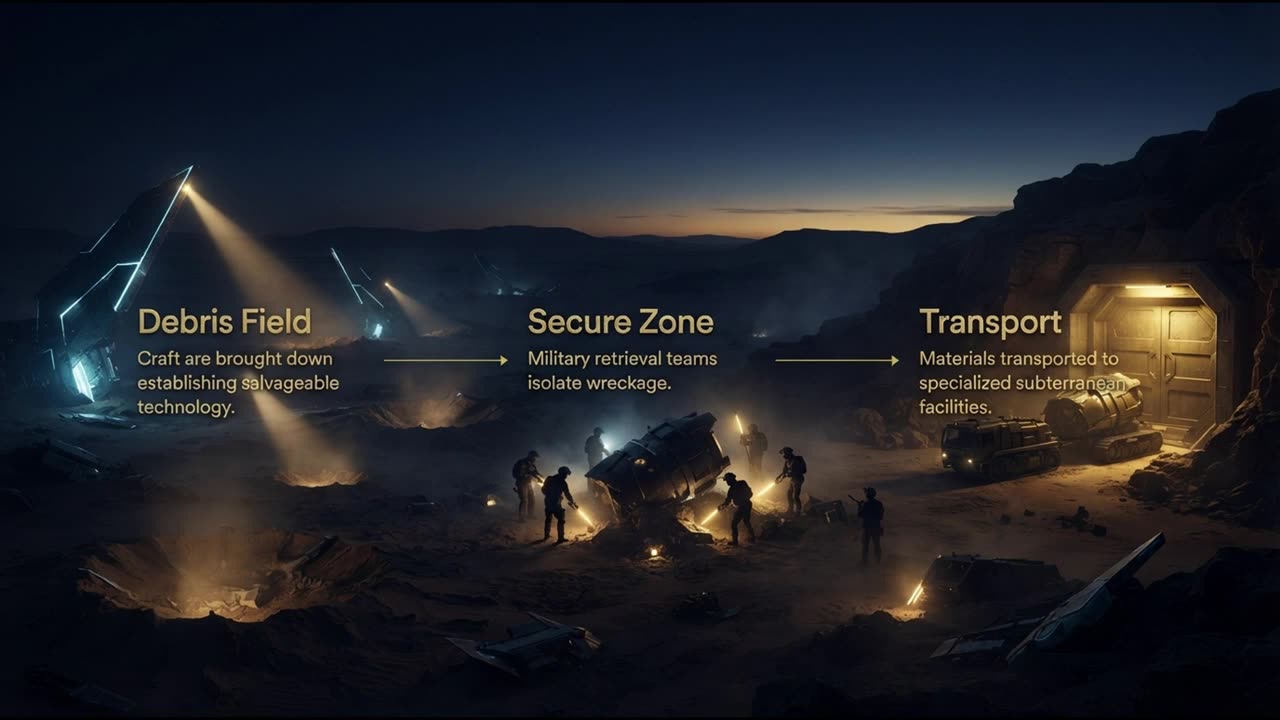
Hardware From A Broken Sky — Staged and forced craft crashes leave salvageable non-terrestrial hardware in debris fields for military recovery.
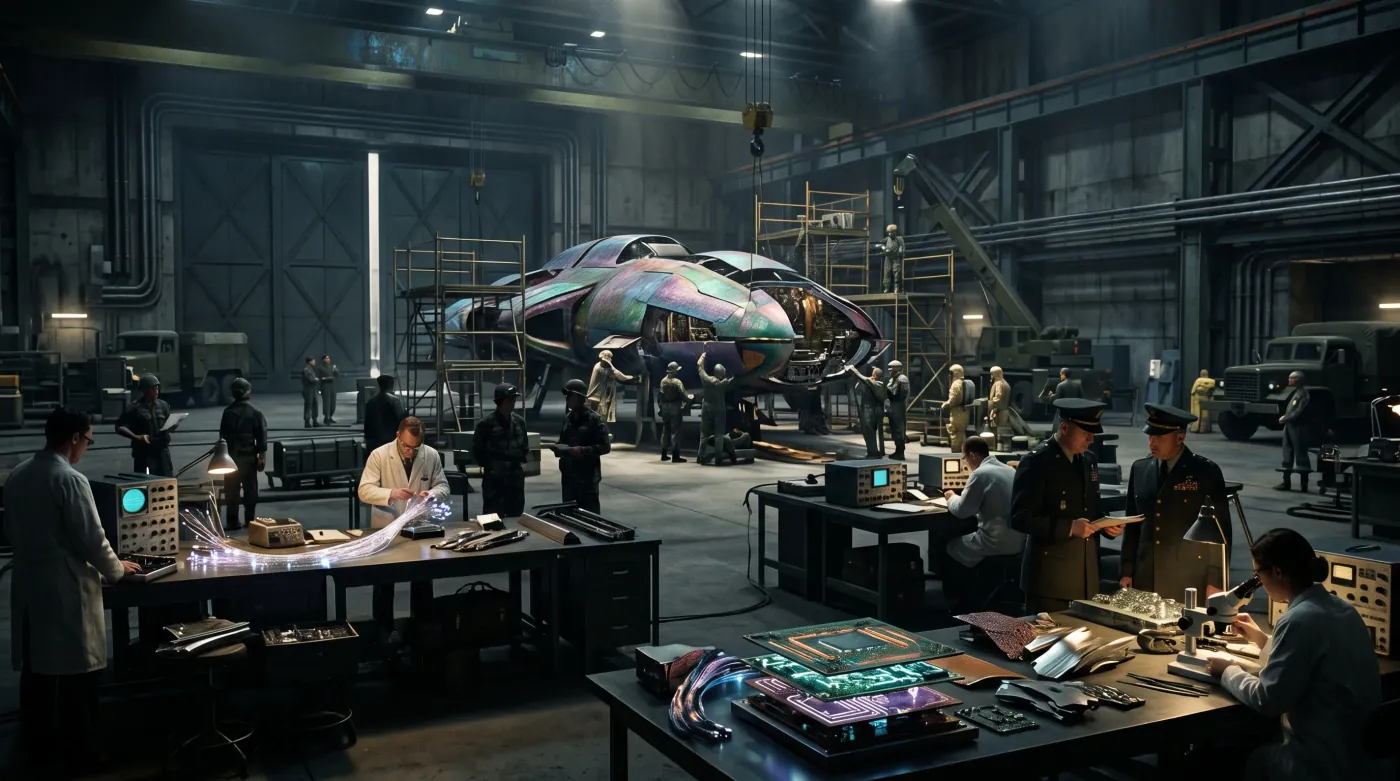
Technology Swaps represent the covert pipeline through which non-terrestrial hardware, exotic material science, and advanced electronic architectures are transferred into human society, replacing genuine internal research with reverse-engineered salvaged artifacts.
Test your understanding of Technology Swaps — the crash-salvage pipeline that moved non-terrestrial hardware into human electronics, materials, and optics.


Hardware From A Broken Sky — Staged and forced craft crashes leave salvageable non-terrestrial hardware in debris fields for military recovery.
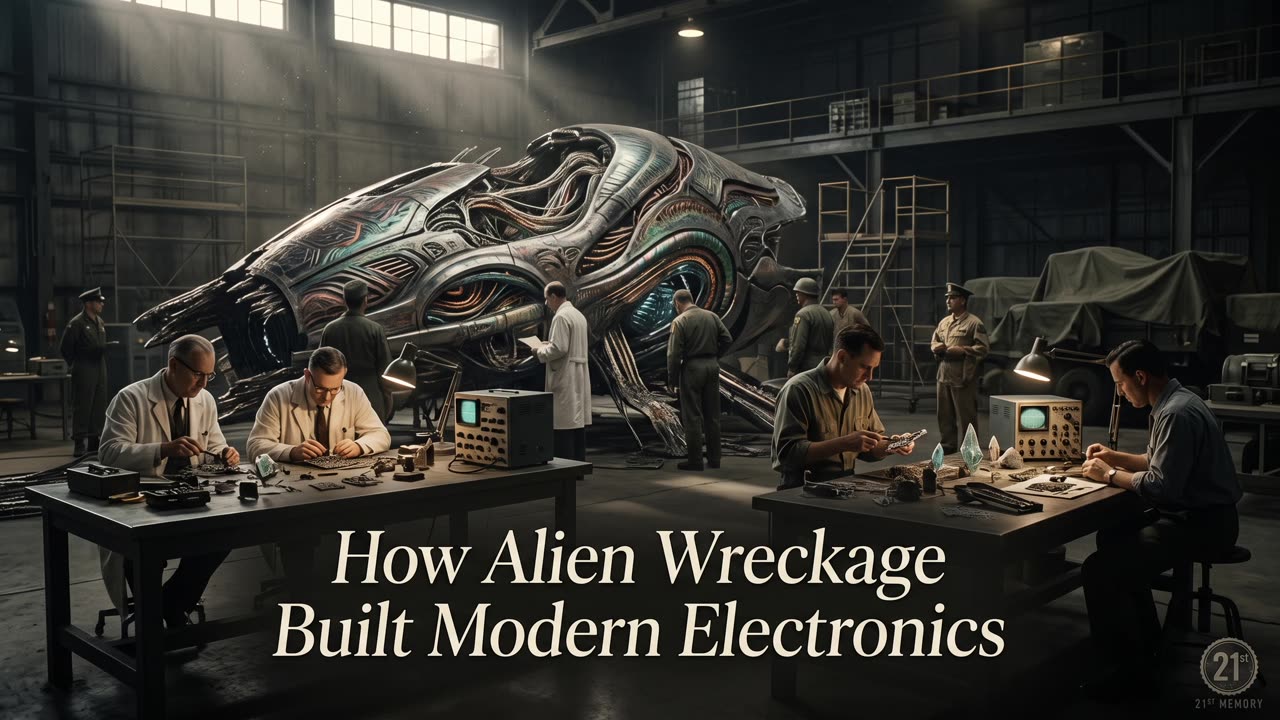
How alien wreckage built modern electronics — Fibre optics, Kevlar, night vision, thermal imaging, printed circuit boards, and the point-contact transistor leaked from crash wreckage into commercial manufacturing.
 Original transmissions →
Technology Swaps represent the covert pipeline through which non-terrestrial hardware, exotic material science, and advanced electronic architectures are transferred into human society, replacing genuine internal research with reverse-engineered salvaged artifacts. Over ninety-six percent of modern human technological progress originates not from organic terrestrial invention, but from this covert exchange and salvage infrastructure. Rather than direct physical handovers or open technological exchanges, these swaps are executed through staged or forced craft crashes, leaving salvageable technology within crash debris fields to be recovered by military authorities.
While the broader trade architecture involves elite controllers exchanging sequestered human populations for advanced technical capabilities, the physical delivery mechanism relies on crash wreckage containing advanced hardware. The crash site functions as the actual point of transfer. Technologies acquired through this exact pipeline—most notably fibre optics, Kevlar, night vision, thermal imaging, the printed circuit board, and the point-contact transistor—were originally targeted exclusively for dark-budget exploitation, but ultimately leaked into commercial manufacturing, permanently altering the trajectory of human civilization.
The Earth-invention story presented in academic textbooks, patent offices, and corporate histories is complete theatre. The conventional narrative attributing mid-twentieth-century breakthroughs in optics, synthetic polymers, electro-optics, and solid-state electronics to spontaneous human innovation masks a single, unified source: the recovery of non-terrestrial wreckage. Human scientists did not independently conceptualize these foundational technologies; they reverse-engineered physical hardware recovered from crash sites.
A single crash recovery event—the 1947 retrieval of two downed H1 Orion craft in New Mexico—served as the direct source for an entire cluster of foundational modern technologies. The public synopsis lists fibre optics, Kevlar, night vision, and thermal imaging directly beside the printed circuit board and the point-contact transistor as the identical crash leak. These components formed part of an integrated non-terrestrial technical ecosystem that was broken down and cataloged by military retrieval units.
The technical items retrieved through Technology Swaps were never intended for public consumption or commercial deployment. Governing entities and military authorities designated this hardware strictly for black-budget programs and Unacknowledged Special Access Projects (USAPs) within the Military Industrial Complex (MIC) to maintain absolute military superiority and population containment.
Commercial release occurred as an unintended byproduct of corporate greed and subcontracting. When defense contractors such as Bell Labs, Lockheed Skunkworks, IBM, and British Aerospace were tasked with reverse-engineering specific components, market incentives drove the adaptation of solid-state components into consumer goods, bypassing the intended compartmentalization and permanently disrupting the custodial control schedule.
The physical architecture of Technology Swaps operates without direct diplomatic handovers or open transfers. Controllers and retrieval agencies utilize physical crash sites as the delivery point. Craft equipped with advanced material science, guidance systems, and solid-state electronics are brought down over remote terrestrial zones, establishing a debris field filled with salvageable technology. Military retrieval teams immediately secure the perimeter, isolating the wreckage from public observation, and transport the materials to specialized subterranean testing facilities.
Once inside secret military installations, recovered components undergo exhaustive material decomposition, chemical analysis, and structural reverse-engineering. Specialists catalog the structural alloys, optical waveguides, infrared detection layers, and semiconductor substrates, assigning specific hardware fragments to specialized research divisions based on corporate capability and military necessity.
The crash leak provided a comprehensive suite of hardware that replaced primitive human mechanical and electrical systems across multiple domain disciplines:
Solid-State Electronics and Circuit Architecture: Prior to the crash recovery, human electronics relied entirely on vacuum tubes—fat glass bulbs operating via electron flow through electric fields inside a vacuum. Vacuum tubes generated extreme heat, consumed massive amounts of energy, and required immense physical space. The recovery of the point-contact transistor introduced solid-state semiconducting physics utilizing silicon, allowing electrical switching and amplification in a fraction of the space without heat generation or vacuum glass. Harvested alongside the transistor was the printed circuit board, which eliminated complex manual wire looms by etching conductive pathways directly onto non-conductive substrates.
Electro-Optics and Infrared Detection: Salvaged navigation and sensor arrays yielded night vision and thermal imaging technologies. Night vision reverse-engineered the electro-optical image intensification capability of non-terrestrial optical sensors, allowing military personnel to amplify ambient light in total darkness. Thermal imaging extracted the infrared radiation detection mechanisms used in craft targeting, translating heat signatures into high-contrast visual displays.
Advanced Fiber strands and Material Polymers: High-purity glass fiber strands harvested from internal data buses inside the craft were reverse-engineered into fibre optics, enabling light-based signal transmission that vastly surpassed copper wire bandwidth. Simultaneously, synthetic polymer strands extracted from craft interior lining and hull shielding provided the molecular blueprint for Kevlar, yielding high-tensile material capable of absorbing kinetic impacts and extreme heat.
The progression from classified military laboratory to household consumer item followed an unintended leakage pathway. Unacknowledged Special Access Projects within the Military Industrial Complex lacked the solitary capacity to solve every metallurgical and electronic challenge in-house. Consequently, MIC managers farmed out specific debris fragments to elite corporate research centers under strict non-disclosure contracts.
Bell Labs received semiconductor samples to address the physical size and heat limitations of vacuum tube telecommunications. Other aerospace firms received fiber and polymer samples. As corporate researchers grasped the commercial potential of solid-state switching and synthetic fibers, corporate leadership leveraged these discoveries to build new commercial markets. Over subsequent decades, technology harvested from the crash leak migrated from dark-budget weaponry into wristwatches, microwave ovens, cellular phones, television monitors, and personal computing hardware, completely altering public life.
Custodial management schedules rely on keeping human populations technologically rudimentary, enforcing periodic resets that return society to a primitive baseline whenever technological awareness advances too far. By injecting solid-state electronics, fiber optic communications, and advanced material sciences nearly a millennium ahead of the custodial master schedule, Technology Swaps shattered the controlled evolutionary timeline. Controllers were forced to rapidly accelerate their containment strategies, shifting from slow physical control to digital surveillance and automated network management.
Rather than isolated, independent discoveries scattered across decades, the simultaneous acquisition of fibre optics, Kevlar, night vision, thermal imaging, printed circuit boards, and point-contact transistors formed a unified, codependent technical matrix. Modern telecommunications infrastructure requires fiber optic backbones driven by solid-state transistorized switches, mounted on printed circuit boards, and encased in high-durability polymer housings. The presence of one technology enabled and reinforced the deployment of the others.
The operational structure of Technology Swaps relies on an intricate web of private defense contractors, corporate research centers, and academic institutions. By distributing salvaged components across organizations like Bell Labs, IBM, and Lockheed Skunkworks, military managers obscured the non-terrestrial origin of the core science behind corporate research papers, public patent filings, and corporate rivalries, embedding exotic hardware directly into the global industrial base.
The reality of Technology Swaps completely invalidates the institutional history of human scientific progress. Standard textbook narratives attributing the invention of solid-state physics, complex polymer chemistry, and electro-optical image amplification to independent mid-century human genius are exposed as deliberate public relations theatre designed to hide the salvage origin of modern technology.
Although originally intended to outfit dark-budget surveillance systems and military hardware, the commercial leakage of transistorized electronics and fiber optics led directly to mass computing accessibility. The rapid miniaturization of electronic components enabled the proliferation of personal computers, handheld communication devices, and global digital networks, placing high-density computing power directly into public hands.
The insertion of point-contact transistors and printed circuit boards triggered an irreversible explosion in circuit density. In the span of a few decades, electronic architecture scaled from crude point-contact nodes to modern microchips containing tens of billions of transistors on a single silicon substrate. This exponential jump in processing power stemmed entirely from the initial reverse-engineering of salvaged craft electronics, permanently redefining human technological capability.
This topic is free to share. Support the archive →