Broadcast Reality
Broadcast Reality — Television and radio install artificial identity archetypes and set the boundaries of acceptable societal discourse.
Television and radio function as primary NPC programming outlets engineered to set public opinion, dictate social behavior, and systematically mold human consciousness.
Broadcast Reality — Television and radio install artificial identity archetypes and set the boundaries of acceptable societal discourse.
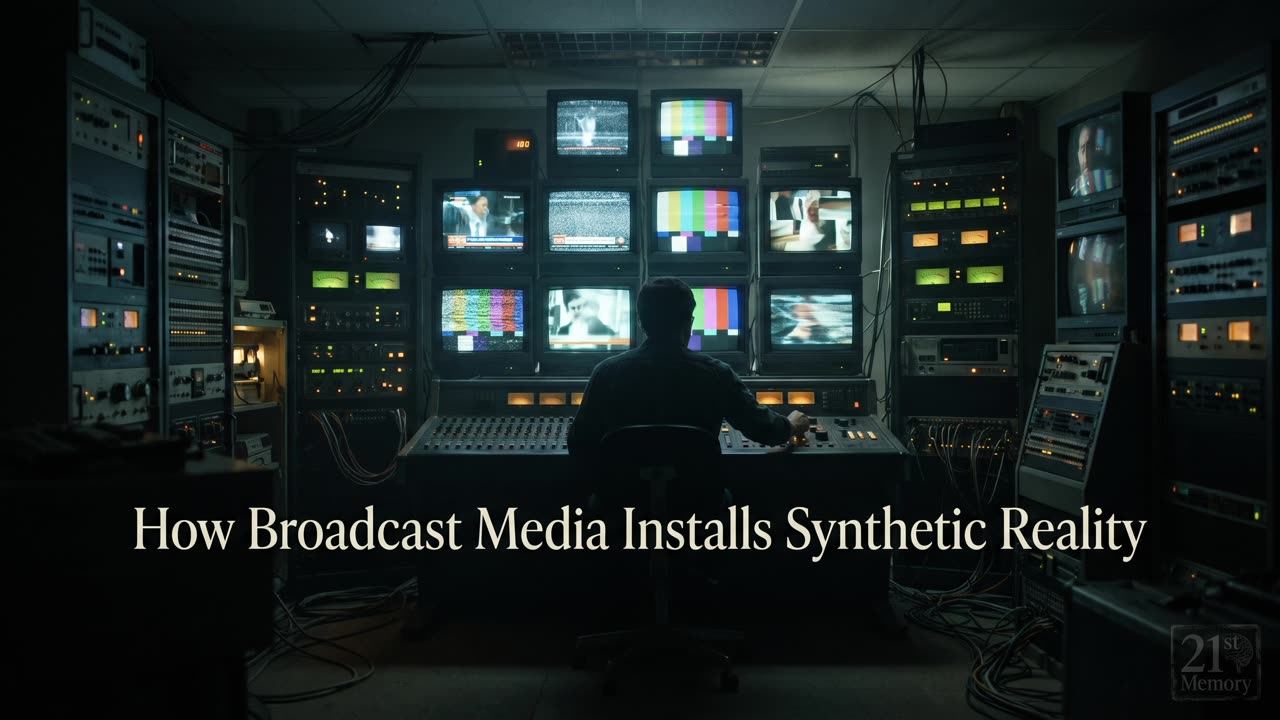
How Broadcast Media Installs Synthetic Reality — Broadcast outlets interlock with schools, peers, print, and controlled internet channels to lock perception into a standardized matrix.
 Original transmissions →
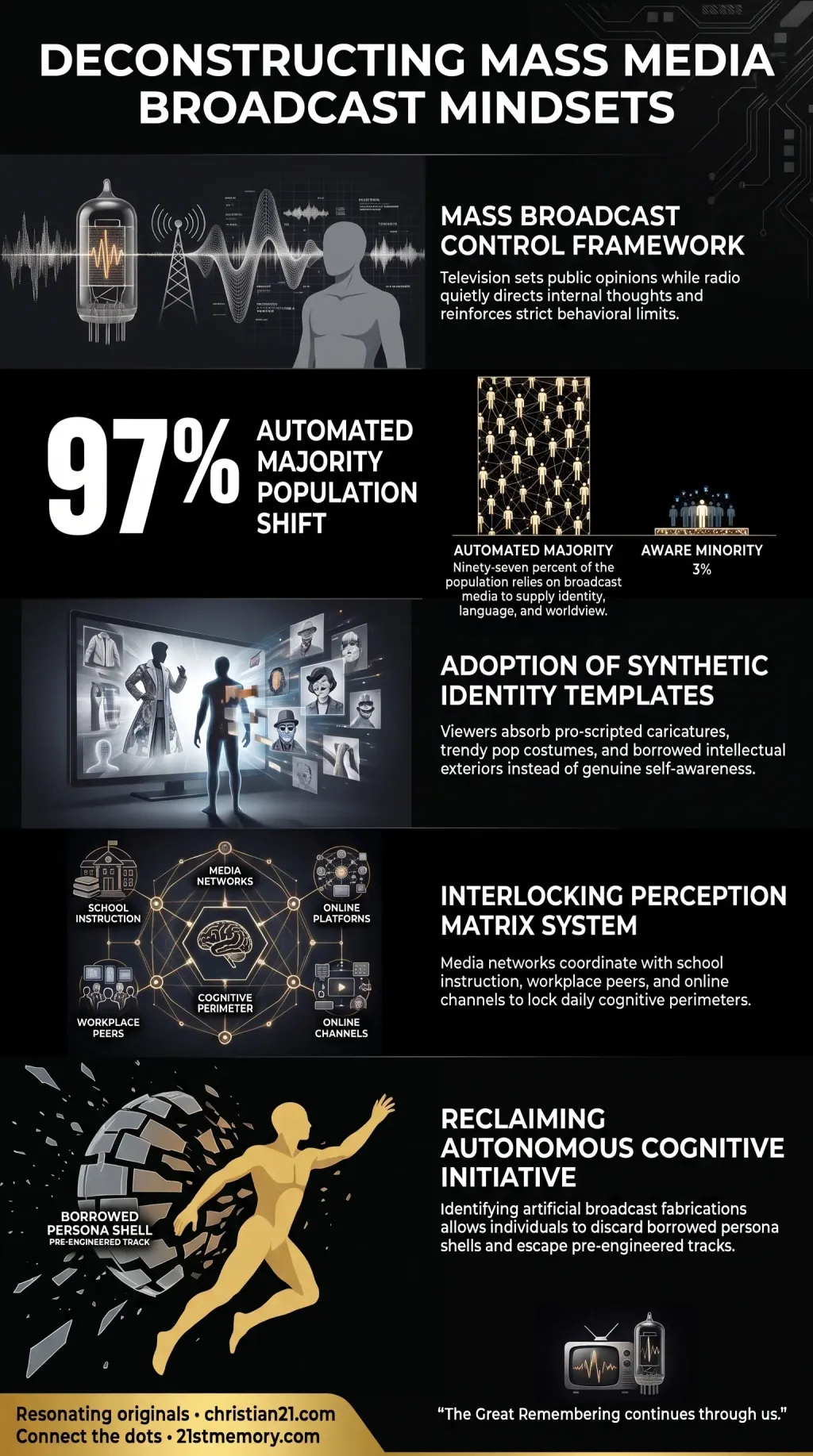
Television and radio function as primary NPC programming outlets engineered to set public opinion, dictate social behavior, and systematically mold human consciousness. While television directly sets opinions by presenting constructed narratives and character stereotypes, radio is designated as the thinking man's television, operating with equal efficacy to direct internal thought processes and reinforce behavioral limits. Together, these mediums form an intrusive broadcast framework that installs artificial identity archetypes and defines the boundaries of acceptable societal discourse.
Television actively sets opinions across the population by presenting specific character models that people select, absorb, and live inside.
Radio operates as the thinking man's television, maintaining continuous cognitive and behavioral programming under the appearance of a more thoughtful or refined broadcast format.
Non-player characters (NPCs) realize their pre-established thought-avenues and intellectual boundaries by tuning into television and radio broadcasts.
Broadcast media outlets do not operate in isolation; they interlock with formal school education, workplace and social peers, print literature, and controlled internet 'truth' channels to lock individual perception into a standardized matrix.
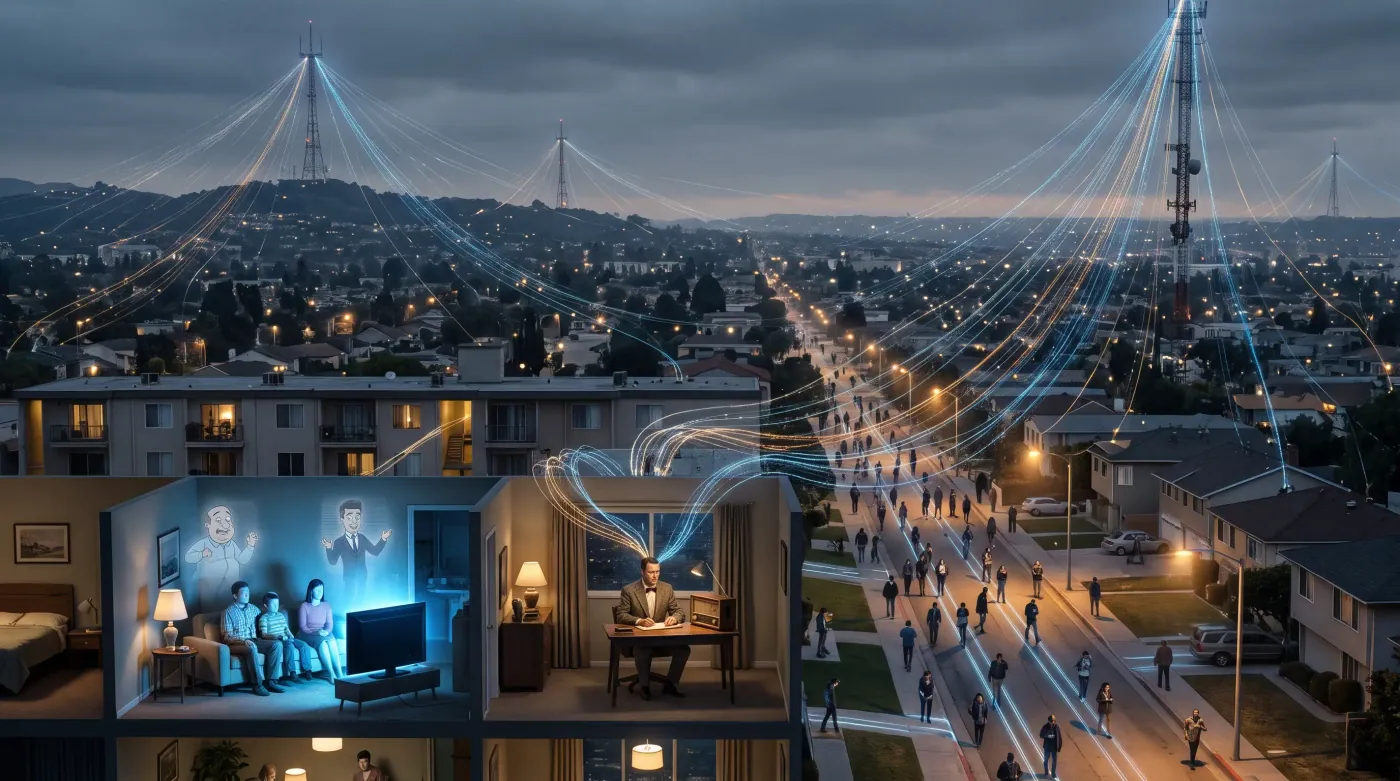
Broadcast show characters provide fixed identity templates that individuals occupy in lieu of developing genuine self-awareness. Men aspire to emulate the Homer Simpson stereotype, conforming their lifestyle and behavioral habits to a low-effort cartoon caricature. Mainstream television shows such as Friends instill sudden, uniform shifts in consumer habits, such as prompting collective decisions to adopt specific dietary preferences like pizza.
The pop costume and trendy visual attire of pop singers establish standardized aesthetic standards for mass imitation. Conversely, individuals seeking an intellectual demeanor gravitate toward the bow-tie solicitor archetype presented in specialized broadcast shows, taking on a borrowed intellectual exterior.
Non-player characters encounter their designated thought-avenues by repeatedly interacting with television and radio programming. These broadcast outlets work alongside mandatory school instruction, interactions with peers at work or abroad, and online 'truth' channels to ensure cognitive activity remains safely within pre-approved parameters. Media networks leverage these outlets to guide mass emotional reactions, maintaining tight emotional control over the public.
Situated within broader inversion tactics, television and radio function as essential mechanism nodes designed to replace natural human awareness with scripted broadcast narrative.
The messaging delivered through television and radio seamlessly coordinates with secondary societal institutions — including school curricula, social pressure from peers, and alternative internet 'truth' channels — ensuring that non-player characters remain insulated from authentic reality.
Achieving complete liberation from automated societal programming requires identifying how television and radio manufacture artificial opinions and force behavioral compliance.
Recognizing that societal identity types — ranging from the Homer archetype to the bow-tie solicitor — are artificial broadcast fabrications allows individuals to discard borrowed persona shells, abandon media-driven opinion, and break out of established thought-avenues.
This topic is free to share. Support the archive →