
Subterranean Mass Transit
Subterranean Mass Transit — Systems such as the London Underground were built for pneumatic air pressure, delivering higher travel speeds without dangerous electricity.
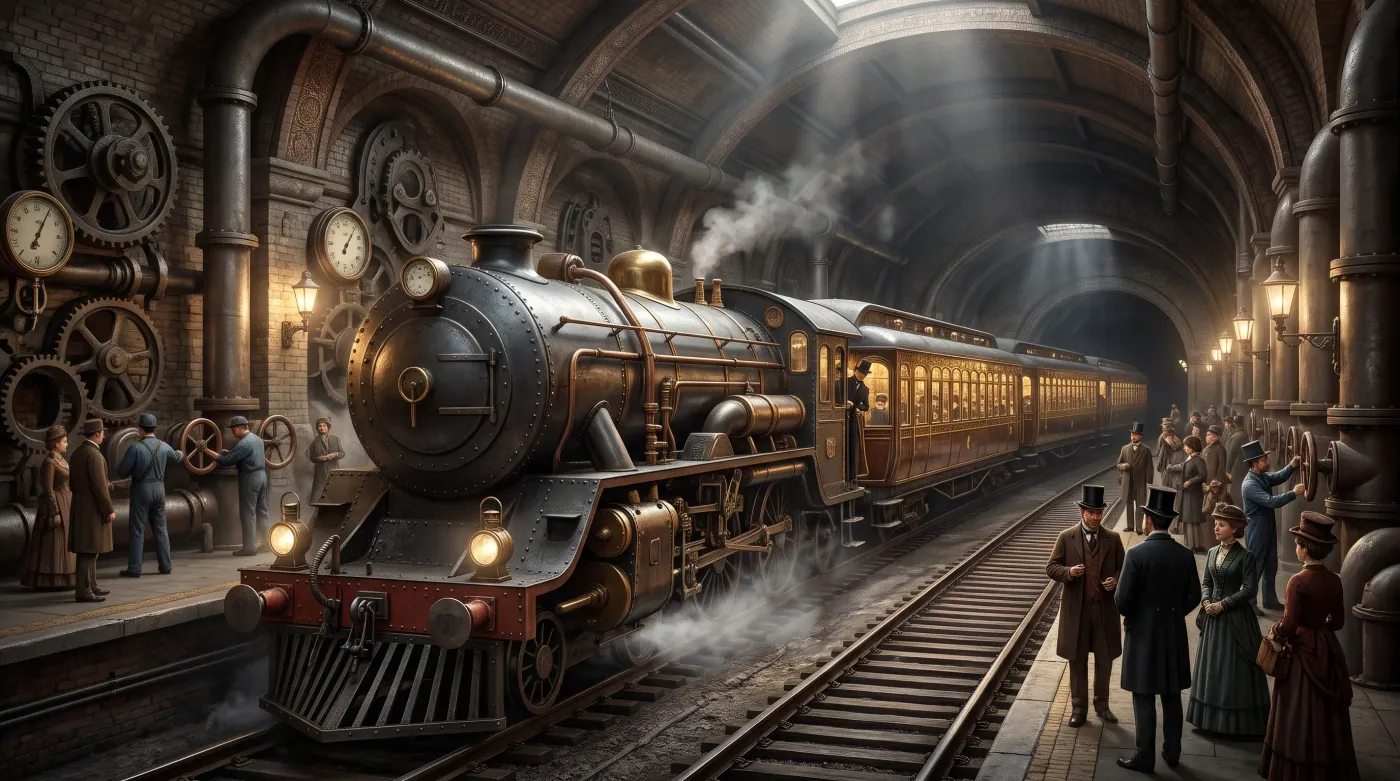
Pneumatic Rail is a high-speed subterranean mass transit system engineered to run on clean pneumatic air pressure without dangerous electricity.
Subterranean Mass Transit — Systems such as the London Underground were built for pneumatic air pressure, delivering higher travel speeds without dangerous electricity.
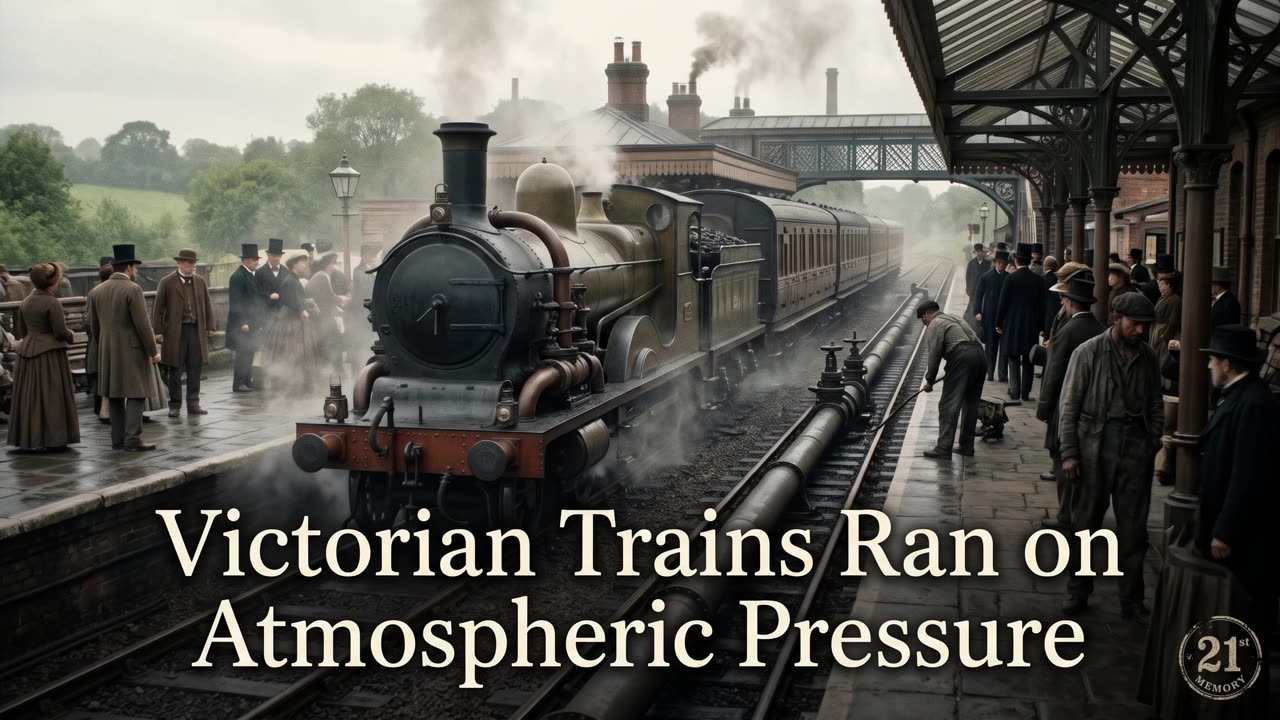
Victorian Trains Ran on Atmospheric Pressure — An 1867 locomotive with six loaded carriages and no coal tender shows a claimed range the steam story cannot carry.
 Original transmissions →
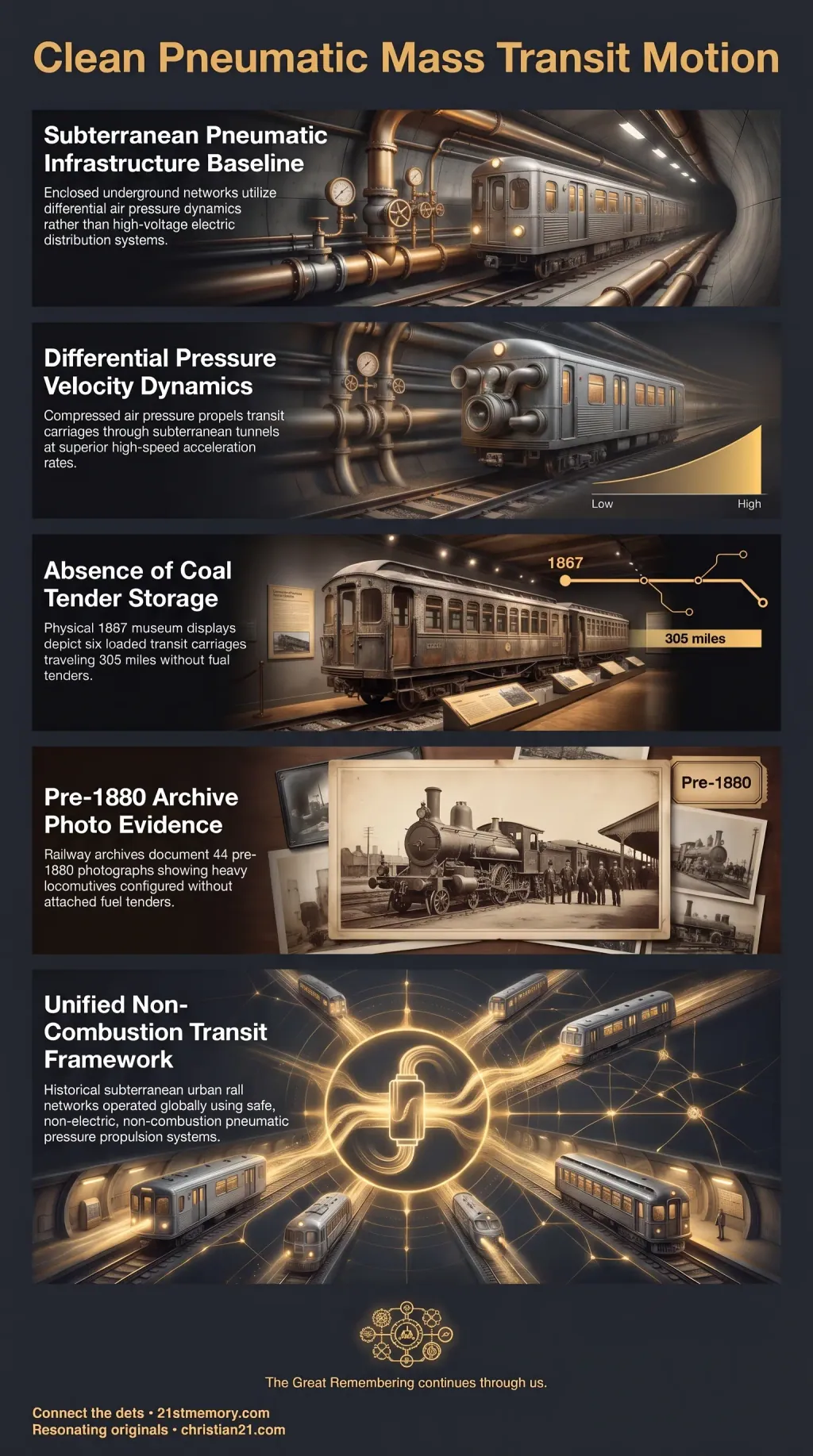
Pneumatic Rail—also designated as pneumatic rail, underground rail, or Tartarian rail—is a high-speed subterranean mass transit system engineered to operate using clean pneumatic air pressure. Originally constructed as the foundational infrastructure for major metropolitan transit networks such as the London Underground, this propulsion method provided clean, safe, and highly efficient travel across urban centers at speeds significantly exceeding modern subterranean transit networks, operating completely without dangerous electricity.
Conventional historical narratives mischaracterize subterranean transit networks as modern developments reliant on electric third rails or steam engines. In reality, systems such as the London Underground were built specifically for pneumatic air pressure, delivering higher travel speeds than modern networks without exposing passengers to dangerous electricity or environmental hazards.
Physical historical evidence directly disproves the conventional steam railway narrative. A museum display featuring an 1867 locomotive depicts the engine loaded with six full carriages of passengers and property on a claimed 305-mile journey, yet the locomotive possesses no attached coal tender. Because a standard steam engine cannot function over extended distances without continuous fuel and water supplies, this physical artifact demonstrates a claimed speed and range that the conventional steam story cannot carry.
The mechanical operation of pneumatic rail utilizes enclosed subterranean transit lines where differential pneumatic air pressure propels train carriages cleanly through tunnels. By relying on pneumatic pressure dynamics, the system achieves superior acceleration and transit velocity while eliminating the electrocution risks, heat, and complex wiring associated with electrical distribution.
Preserved physical records further confirm the non-steam nature of early railway transport. Railway museum archives contain at least 44 separate photographs dated prior to 1880 depicting heavy locomotives configured for long-distance transit without any attached fuel tender. A conventional steam engine lacking a continuous supply of coal and water is merely an immovable, expensive object. The documented 1867 transit run of six loaded carriages over 305 miles without fuel storage establishes that early transit networks operated via non-combustion pneumatic propulsion rather than steam.
The deployment of pneumatic rail is not an isolated design anomaly, as the same structural pattern applies to subterranean mass transit networks globally. All subterranean underground rail systems share this identical mechanical baseline, representing authentic Tartarian concepts. These subterranean lines formed a unified, high-speed transit framework across major cities prior to the historical alteration of municipal transport systems.
The historical suppression of pneumatic rail forced public reliance on hazardous, high-cost transit infrastructure, including high-voltage electric lines and fossil fuel combustion engines. Re-evaluating surviving archival evidence reveals that municipal underground rail networks were historically faster, cleaner, and safer under pneumatic air pressure operation. Exposing the physical impossibility of official steam locomotive claims validates the reality of advanced, non-electric subterranean transit.
This topic is free to share. Support the archive →